
Alpha sits in a crowded, highly competitive field. Within a 30-mile radius you can find mastery-based hubs, Socratic micro-schools, design-thinking spaces, and legacy college-prep institutions. Every single model has a real weakness. The marketing brochures always hide it.
What's worth noting: when we spoke with co-founder Mackenzie Price directly, she mentioned that Marin is on Alpha's expansion radar — which means this conversation is coming to more Bay Area neighbourhoods soon. More campuses mean more families facing this exact decision with less time to research it properly.
For the mechanics of how Alpha's 2-hour model works day-to-day — the software loops, the documented complaints, and what WIRED and 404 Media found — read our Alpha School investigative review. For the tuition and ROI breakdown specific to Bay Area campuses, see our Alpha School cost and value review. For the complete list of Bay Area private schools across every philosophy and price point, our complete Bay Area private school list covers it all.\
Which school Fits Your Kid
Acton Academy vs Alpha School
On paper they look alike — no traditional teachers, guide-led spaces, self-directed learning. Inside they are built on opposite philosophies.
What Acton Actually Builds
The Peer-Run Model
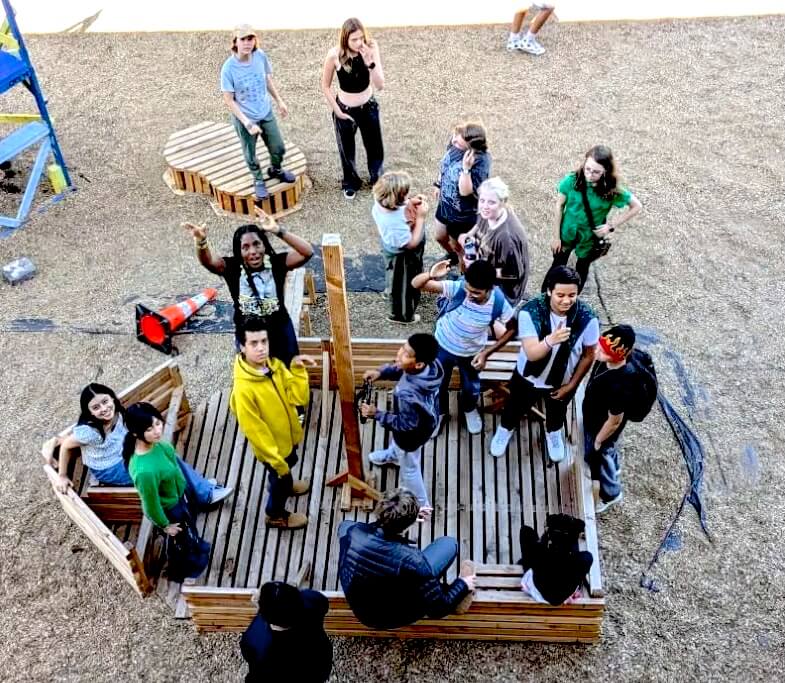
Acton's model runs on Socratic seminars, the Hero's Journey curriculum, and peer-run governance. Guides are contractually forbidden from answering questions directly. If a student asks how to solve a problem, the guide redirects them to a peer, a tool, or a dictionary.
Eagles Run the School
Students — called Eagles — run the school themselves. They set the rules, enforce accountability on each other, and hold town hall meetings when a peer isn't pulling their weight.
What this produces over time: a child who can handle unstructured social situations, build an argument from scratch, defend it under peer pressure, and manage the discomfort of being wrong in front of a group. The entrepreneurial thinking Acton is known for isn't a curriculum subject — it's a survival mechanism that emerges from spending years negotiating with other humans all day long.
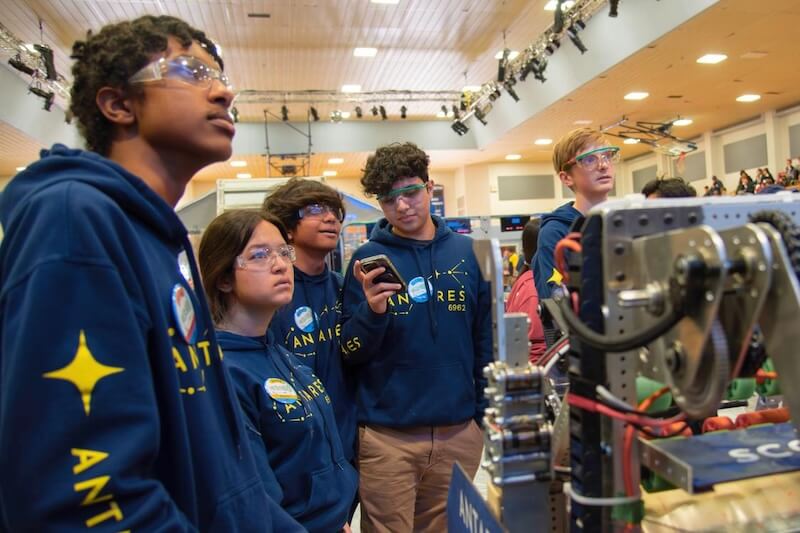
What Alpha Actually Builds
The Software-First Morning
Two focused hours of adaptive software, guided check-ins, a progress dashboard, and the rest of the day for workshops and life skills. The software identifies exactly where a child's understanding breaks, feeds targeted exercises, and tracks every click.
The Efficiency Trade-Off
What this produces: an efficient, self-paced digital operator. For a kid who was losing their mind in a traditional classroom waiting for peers to catch up, this feels like a release valve. They learn that technology is a tool to compress time and get things done.
The gap Alpha doesn't solve: adaptive software is polite. It accepts the right answer and moves on. It doesn't ask why you chose that route. It doesn't push back on your logic. As documented by WIRED (October 2025) and 404 Media (February 2026), a child's dashboard can look completely green while their conceptual depth remains remarkably thin. Full details in our investigative review.
Acton Academy vs Alpha School
Alpha's afternoon life skills and public speaking blocks are genuinely useful. But it's worth asking whether two hours of individual software work followed by guided afternoon activities can produce the same psychological resilience as a model that forces kids to navigate raw human friction all day.
Quality at Acton varies by franchise owner. The SF and Palo Alto campuses are strong. Others can be uneven. And a true math prodigy doesn't have the infrastructure to sprint three grade levels ahead of their Acton cohort in isolation.
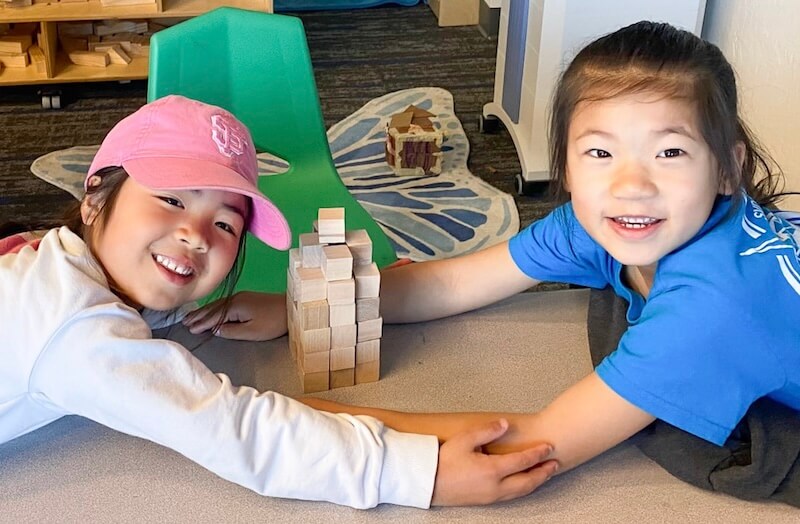
Khan Lab School Review
For Bay Area families who are uncomfortable with traditional schooling but equally uncomfortable betting a child's college transcript on an unaccredited $75K micro-campus, Khan Lab School sits in a category that is consistently underestimated.
What Khan Lab School Actually Builds
The Mastery-Based Progression
KLS runs on a strict model where students do not advance to the next level of mathematics or science simply because the calendar turned to a new month. They advance only when they have demonstrated 100% conceptual mastery. Unlike Alpha, that proof isn't confined to a multiple-choice software quiz or an automated progress bar.
Why Khan Lab Wins on Writing Depth
The Writing Gap Alpha Leaves Open
The most common anxiety local parents raise about Alpha — frequently discussed on Xiaohongshu and local tech threads — is the humanities and writing gap. Because Alpha's core morning is heavily automated, long-form essay writing, structural thesis development, and iterative drafting can easily get shortchanged.
How Khan Lab Solves It
Khan Lab employs credentialed, subject-matter human teachers to drive the humanities track. Students produce argumentative essays, write detailed project documentation, and constantly edit their work based on human critique. Transfer students from KLS arrive at competitive high schools with a highly developed writing voice and proper structural mechanics.
The Student-Created AI Honor Code
The difference in how these two schools approach technology is stark. At Alpha, AI and adaptive software are the invisible infrastructure you sit inside. At Khan Lab, AI is an object of critical analysis.
Rather than receiving a top-down handbook rule from administration about ChatGPT, KLS students were tasked with researching, debating, and drafting the school's actual AI Ethics Policy themselves. That is the difference between using a tool as a shortcut and understanding its systemic implications as a thinker.
The Practical Reality
Cost and Accreditation
At $37,000–$39,500, KLS costs roughly half of Alpha SF and carries full WASC accreditation.
The Social Graph Caveat
The campus is small — around 150 students in a corporate park setting. but 5 times bigger than current Alpha's SF campus - 25 students — so the social graph is limited. If your child doesn't click with the fifteen kids in their age bracket, there isn't a large alternative peer group to pivot to.
For families who want innovation without gambling on college admissions, Khan Lab is the clearest answer on our complete Bay Area private school list.
Alpha School vs Private School
It is easy to dismiss the legacy schools as overpriced and overcrowded. But Harker, Nueva, and Menlo charge what they charge because they offer infrastructure that a tech-enabled storefront genuinely cannot replicate.
Three Things Money Alone Doesn't Buy
1. Credentialed Faculty Who've Spent Decades in Their Subject
A Harker math teacher who has taught calculus for fifteen years can look at a student's handwriting, hear the hesitation in their voice, and explain the same concept four different ways until it clicks. No dashboard replicates that.
2. Decades of College Admissions Relationships
These schools have full-time counselors with personal relationships inside Stanford, MIT, and UC admissions offices built over decades. They know how to contextualise a student's portfolio in a way a brand-new unaccredited school simply cannot. For the full tuition and ROI comparison between Alpha and these schools, see our Alpha School cost and value review.
3. The Compounding Social Graph
A child entering Harker's 1,900-student campus joins competitive teams, orchestras, and an elite alumni network that compounds in value over twenty years. For families who view education through the lens of long-term social capital, that permanent network is the actual product being purchased.
Browse the full profiles for Harker, Nueva, Menlo, and every other serious Bay Area option on our complete Bay Area private school list. If you're considering building your own version of the Alpha model at home instead, our Alpha Anywhere and homeschool alternatives review covers the full DIY stack.
Alpha School Alternatives Also Worth Considering
These schools from our complete Bay Area private school list don't need a full section — but each deserves a serious look depending on your child's specific wiring.
For Social-Emotional Development
Synapse School (K-8, Menlo Park) — Our top pick for SEL. Treats emotional coaching with the same rigour as physics. 11,000 sq ft Makerspace. Not for families who want hardcore math acceleration.
Millennium School (6-8, SF) — Built for the middle school brain. Mindfulness, social maturity, and emotional regulation before high school pressure hits. Fully operational for 2026-27.
For Hands-On Physical Learning
Brightworks (K-12, SF) — The antithesis of screen learning. Power tools, lumber, multi-week building projects. Physical grit that no dashboard can replicate. Under 100 students.
For Pacing Control With a Human Teacher
Fusion Academy (6-12, multiple Bay Area locations) — 1-to-1 instruction with a live teacher, not a dashboard. A child can finish a year of math in months. Expensive ($40K+) with no peer group.
Tilden Preparatory School (6-12, Albany/Walnut Creek) — Extreme subject-by-subject pacing control. Underrated and understated. Limited extracurriculars but genuine academic flexibility.
For Deep Thinkers and Math Lovers
Proof School (6-12, SF) — For kids who genuinely love the struggle of mathematics. By 9th grade many students are deconstructing the algorithms behind Alpha's adaptive software.
Helios School (K-8, SF) — Inquiry-based, project-driven, built for gifted kids who need to ask why rather than what.
For College-Prep With an Innovative Edge
The Bay School (9-12, SF) — Block schedule with three-week immersive interdisciplinary projects. Strong for kids with strong t
Lick-Wilmerding High School (9-12, SF) — Traditional college prep actively evolving. New Dean of Technology since July 2025. AI as an augmentation tool, explicitly not a shortcut.
Menlo School (6-12, Atherton) — High-pressure, high-cost, high-outcome. Strategic AI integration including debate coaching. Not for late bloomers.
Full profiles and admissions details for every school above are on our complete Bay Area private school list.
The One Thing No Admissions Tour Will Tell You
The school that fits your child will always outperform the one with the best marketing pitch. And if none of these models fits your budget or your child's personality, our Alpha Anywhere and homeschool alternatives review shows you how to build a comparable learning environment for under $200 a month.
AIFUNLAB VERDICT: Metrics, Character, or Accreditation?
When stripping away the "future of education" marketing gloss, choosing between these three progressive models comes down to what you want your tuition dollars to optimize:
- Choose Alpha School if: Your child is a highly disciplined, task-driven "lone wolf" who wants to gamify their education. It is ideal if they want to blast through academic software tracks by noon, bypass traditional classroom busywork entirely, and clear their afternoons for elite athletics or early venture projects. You are paying premium corporate tuition for hyper-efficient software tracking and data pacing via a system-wide Cognia-accredited platform.
- Choose Acton Academy if: You want a self-paced, highly flexible lifestyle but refuse to pay premium corporate-level tuition. Acton is designed for families who prioritize peer accountability, real-world entrepreneurial friction, and Socratic character growth over strict software dashboard metrics. It delivers exceptional community value through low-overhead, neighborhood-focused micro-classrooms.
- Choose Khan Lab School if: You want a deeply personalized, AI-forward environment but are not willing to gamble on alternative transcription models. Khan Lab delivers the security of a fully accredited, traditional college-preparatory pipeline while keeping human relationships, collaborative peer projects, and expert teacher mentorship at the absolute center of the classroom.
Alpha School, Acton Academy, and Khan Lab School FAQs
Q: How does Khan Lab School compare to Alpha regarding AI integration and accreditation?
A: Both hold official accreditation, but their academic frameworks and transcription models differ entirely. Khan Lab utilizes traditional regional frameworks that produce standard, college-ready GPAs and transcripts. Alpha operates under a system-wide Cognia accreditation model, tracking progress through third-party apps behind a proprietary dashboard wrapper. While Khan Lab relies on internal student self-regulation and human teachers, Alpha utilizes strict algorithmic surveillance and intensive weekly metric tracking to enforce pacing goals
Q: How do tuition costs and campus footprints compare among Alpha, Acton, and Khan Lab?
Alpha is the premium financial outlier charging up to $75,000 for urban storefronts, while Acton ranges from $15,000 to $30,000 and Khan Lab sits around $36,000 to $43,000. Operating out of corporate coworking layouts in the Bay Area, Alpha trades traditional school acreage for micro-campuses. Acton and Khan Lab hubs offer significantly more localized community value per dollar, whereas Alpha's steep price pays almost exclusively for accelerated data pacing and individual dashboard metrics.
Q: Who are these alternative micro-school models not a good fit for?
A: These alternative models are poorly suited for passive learners who require continuous adult lecture guidance, face-to-face hand-holding, or traditional varsity sports infrastructures. Because Alpha, Acton, and Khan Lab School reject traditional top-down teaching methods, students without independent drive or self-regulation will experience severe academic drift. Families seeking expansive physical campuses, elite musical departments, or standard state-accredited special education infrastructure will find these decentralized environments overly restrictive.

Derivatives & startup experience across 3 continents, including China. Elementary school mom to one very active kid. LSE MSc.



%20(300%20x%20250%20px)%20(1).avif)
%20(300%20x%20250%20px)%20(2)%202.avif)



-min.avif)